
基础版 (适合初中或英语初学者)
How to Be a Good Speaker**
Giving a speech can be scary for many people. But with some simple skills, anyone can become a good speaker. Here are a few tips.
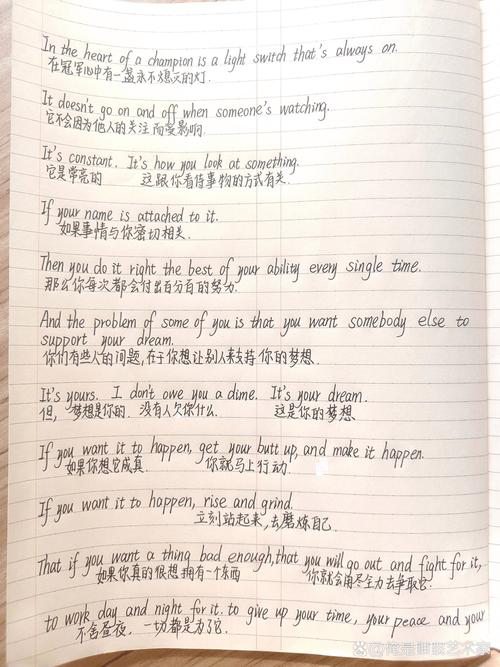
First, you must prepare well. Know what you want to say and practice it many times. This will make you feel more confident. Second, speak clearly and slowly. Don't rush. Make sure everyone in the room can hear you and understand your words. Third, make eye contact. Look at your audience in different parts of the room. This helps you connect with them and makes your speech more interesting. Finally, try to be yourself. Don't be too nervous. Just relax and share your ideas with a smile.
In conclusion, being a good speaker is not a talent you are born with. It is a skill you can learn. With good preparation, clear speaking, and eye contact, you can give a great speech.
标准版 (适合高中生或大学英语水平)
The Art of Effective Public Speaking**
Public speaking is an essential skill in both academic and professional life. Mastering this art can open many doors, but for many, the thought of addressing an audience is daunting. However, by focusing on key techniques, anyone can transform from a nervous novice to a confident and compelling speaker.
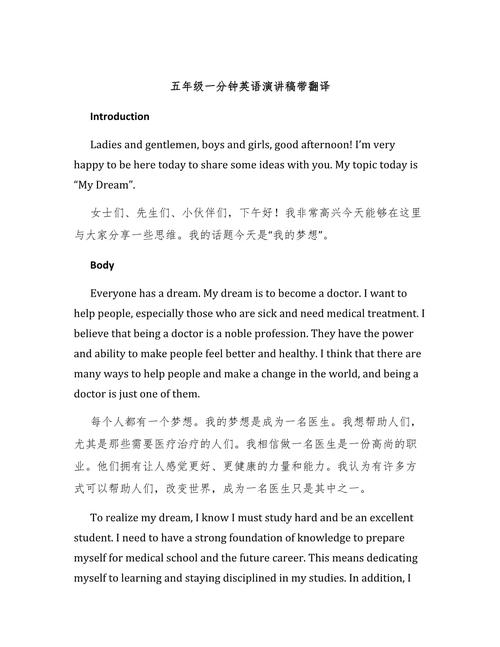
The foundation of any successful speech is thorough preparation. This involves not only researching your topic extensively but also structuring your content logically with a clear introduction, body, and conclusion. Practice is equally crucial. Rehearsing your speech multiple times, ideally in front of a mirror or a trusted friend, helps you refine your delivery and internalize the material, which in turn builds confidence.
On the day of the speech, your delivery is paramount. Speak with clarity and at a moderate pace, ensuring your audience can easily follow your arguments. A well-modulated voice is more engaging than a rapid, monotonone one. Furthermore, non-verbal communication plays a vital role. Maintain eye contact with various people in the room to create a sense of connection and sincerity. Use purposeful gestures to emphasize points, and be mindful of your posture—stand tall and open to appear confident and approachable.
Perhaps the most important tip is to manage your nervousness. It is normal to feel anxious, but channel that energy into enthusiasm for your topic. Remember that the audience generally wants you to succeed. Focus on sharing your message rather than on your fear. By combining diligent preparation with mindful delivery, you can conquer your fears and deliver speeches that are not only informative but also inspiring.
进阶版 (适合大学英语水平或竞赛使用)
Mastering the Craft of Oratory: A Guide to Persuasive Public Speaking**
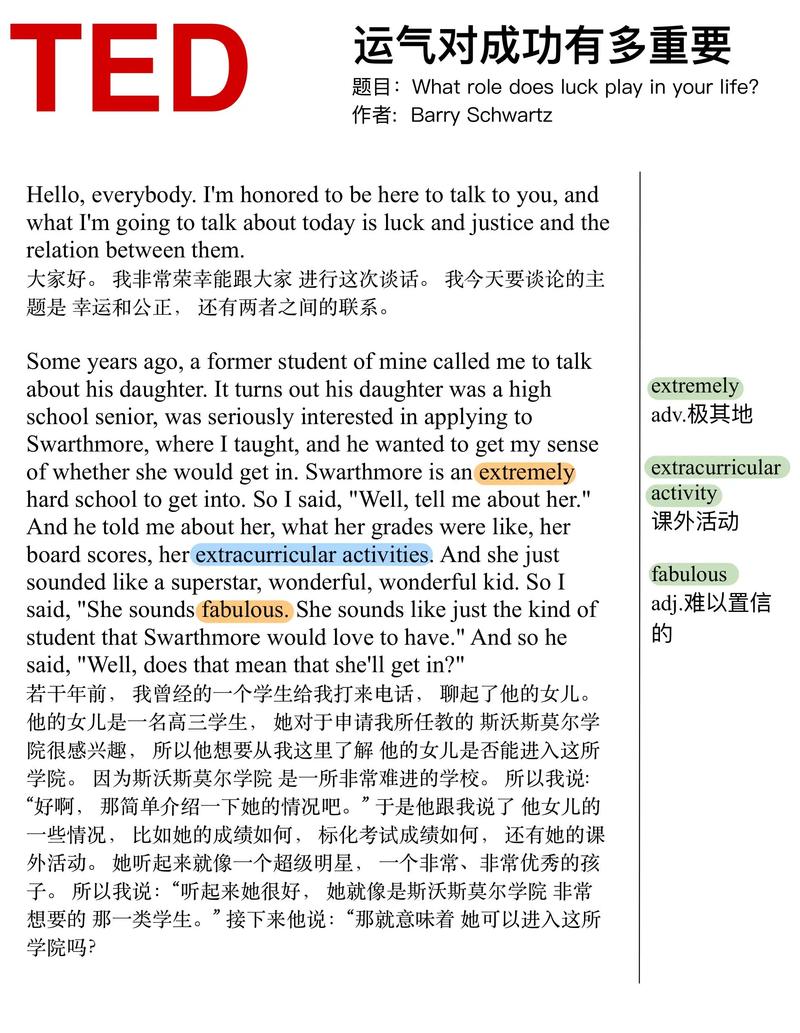
In an era dominated by digital communication, the power of the spoken word remains undiminished. Oratory, the art of public speaking, is a potent tool for influence, leadership, and intellectual exchange. To move an audience is not merely to inform them, but to resonate with their emotions and inspire them to action. This mastery, however, is not an innate gift but a cultivated discipline, built upon a tripod of preparation, performance, and psychological fortitude.
The first pillar is meticulous preparation. This transcends mere memorization of facts; it is the deep, internalization of a message. A speaker must become an expert on their subject, anticipating questions and crafting a narrative that is both logical and emotionally compelling. The structure of the speech must be architecturally sound: a captivating hook to seize attention, a body where each point builds upon the last with seamless transitions, and a conclusion that provides a sense of closure and leaves a lasting impression. This intellectual groundwork is the bedrock upon which confidence is built.
The second pillar is the art of performance. A speech is a live, multisensory experience. The voice is a primary instrument; its modulation in pitch, pace, and volume can convey irony, urgency, or passion. Equally critical is non-verbal communication. Strategic eye contact forges a bond of trust, transforming a monologue into a dialogue. Purposeful gestures and open body language project confidence and sincerity, while stillness can command attention. The speaker must be a conductor, orchestrating every element to guide the audience's journey.
Finally, the third pillar is psychological mastery. The fear of judgment, or glossophobia, is a primal instinct. The key is not to eliminate this anxiety but to harness it. Reframe nervous energy as the passion that fuels your delivery. Shift your focus from your internal fears to the value you are providing to your audience. Cultivate a mindset of service—your goal is to give them something of worth, whether it is knowledge, inspiration, or a new perspective. This outward focus is the ultimate antidote to self-consciousness.
In conclusion, the journey to becoming a masterful speaker is one of continuous learning and practice. It demands a fusion of intellectual rigor, charismatic delivery, and emotional intelligence. By diligently honing these three pillars, any individual can unlock the transformative power of their own voice, turning the daunting task of public speaking into a profound opportunity to connect, persuade, and lead.
核心词汇
-
演讲/口才
- Public Speaking: 公众演讲
- Oratory / Oratorical skills: 演讲术,雄辩的技巧
- Rhetoric: 修辞学,雄辩术
- Elocution: 措辞,演讲法
-
准备阶段
- Preparation: 准备
- Meticulous / Thorough: 仔细的,周到的
- Structure / Outline: 结构,大纲
- Rehearse / Practice: 排练,练习
- Internalize: 内化,使成为自身的一部分
- Build confidence: 建立自信
-
演讲技巧
- Delivery: 演讲方式,表达
- Speak clearly and audibly: 清晰、大声地演讲
- Pace / Tempo: 语速
- Modulate voice: 调整声音,变换语调
- Articulation: 发音,吐字清晰
- Non-verbal communication: 非语言沟通
- Eye contact: 眼神交流
- Body language / Gestures: 身体语言,手势
- Posture: 姿势
- Engage the audience: 吸引观众,与观众互动
-
心理素质
- Nervousness / Anxiety / Apprehension: 紧张,焦虑
- Confidence / Self-assurance: 自信
- Manage / Overcome fear: 克服恐惧
- Channel energy: 转化精力
- Poise / Composure: 镇定,沉着
- Psychological fortitude: 心理韧性
-
演讲效果
- Persuade / Convince: 说服
- Inspire / Motivate: 激励,鼓舞
- Captivate / Engage: 迷住,吸引
- Connect with the audience: 与观众建立联系
- Resonate with: 与…产生共鸣
- Memorable / Impactful: 难忘的,有影响力的
- Compelling / Persuasive: 有说服力的,引人入胜的
实用句型
开头句:
- Giving a speech is a vital skill in modern society.
- For many people, public speaking ranks as one of their greatest fears.
- Mastering the art of public speaking can significantly boost one's career and personal growth.
主体论述:
- The foundation of any successful speech lies in thorough preparation.
- Not only is content important, but also the delivery is paramount.
- Furthermore, non-verbal communication plays a crucial role in conveying your message.
- Perhaps the most challenging aspect is managing one's nervousness.
- It is essential to remember that the audience generally wants you to succeed.
结尾句:
- In conclusion, becoming an effective speaker is a journey of continuous practice and self-improvement.
- By combining diligent preparation with confident delivery, anyone can conquer their fear of public speaking.
- Ultimately, the power of a well-delivered speech lies in its ability to connect, persuade, and inspire.